MITSUBISHI ELECTRIC Changes for the Better
Zpět na přehled
Sdílet přes
Food & Beverage / CPG

Food manufacturing automation explained

30.04.20264 minut čtení

The food and beverage industry stands at a technological crossroads. As consumer demands evolve and operational challenges intensify, food manufacturing automation has emerged as not just an advantage, but a necessity for staying competitive. This comprehensive guide explores how automation is transforming food production, from small-scale operations to large industrial facilities.

The evolution of automation in food manufacturing

Food manufacturing has progressed from manual labour to mechanisation, and now to intelligent automation. Early conveyor belts represented the first wave. Programmable logic controllers brought the second wave in the 1980s and 1990s.

Today's smart food production systems leverage Industry 4.0 technologies—IoT sensors, artificial intelligence, and data analytics—to create adaptive production environments. This evolution addresses modern challenges: consumers demanding personalised products, tightening regulations, skilled workforce shortages, and sustainability needs.

What is food manufacturing automation?

Food manufacturing automation refers to the use of advanced technology, robotics, and intelligent systems to perform tasks traditionally carried out by human workers. This encompasses ingredient handling, mixing, packaging, quality control, and logistics.

Modern food factory automation integrates smart technologies that adapt, learn, and optimise processes in real-time. These systems combine robotics, sensors, data analytics, and AI to maintain consistent quality whilst maximising efficiency and addressing challenges like food safety, fluctuating demands, waste reduction, and labour shortages.

Key automation technologies in food production

Industrial robotics

Modern food manufacturing robots handle delicate products without damage. They perform packaging, palletising, sorting, ingredient dispensing, and case packing. Collaborative robots work safely alongside human operators, adapting to different product sizes with minimal reprogramming.


Intelligent control systems


Programmable logic controllers (PLCs) and distributed control systems coordinate multiple processes simultaneously through advanced communication networks. These platforms provide real-time visibility and integrate seamlessly with enterprise resource planning (ERP) and manufacturing execution systems (MES). Modern industrial networks enable precise synchronisation across production lines, ensuring optimal performance.


Vision and sensing technology


Machine vision systems inspect products at impossible speeds for humans, detecting defects, verifying weights, checking labels, and identifying foreign objects in milliseconds. Combined with sensors monitoring temperature, humidity, and pressure, they create comprehensive quality assurance networks.


Data analytics and Digital Twins


Industry 4.0 food industry applications leverage data analytics to optimise operations continuously. Digital twin technology creates virtual replicas of production lines, allowing manufacturers to test changes and predict maintenance needs without disrupting production. Predictive analytics identify potential failures before they occur.


Automated traceability systems


Traceability systems track ingredients and products through every stage using barcode scanners, RFID tags, and integrated software. These create detailed records for rapid recalls and consumer transparency whilst ensuring regulatory compliance.

Benefits of automation for food manufacturers

Enhanced food safety and compliance

Automated systems minimise human contact with products, reducing contamination risks. Consistent processes eliminate variability, whilst comprehensive data logging provides evidence of proper handling. This simplifies compliance with HACCP, BRC, and FDA standards.


Improved productivity and efficiency


Automation enables 24/7 operation without fatigue. Faster cycle times, reduced changeovers, and optimised resource usage increase output and lower per-unit costs. Many manufacturers report productivity increases of 30-50% after implementing food production automation.


Consistent product quality


Precise control ensures each product meets exact specifications, strengthening brand reputation and reducing waste. Automated quality control catches defects that might escape human inspection.


Reduced waste and operating costs


Accurate dispensing and optimised processes minimise ingredient waste. Predictive maintenance prevents production losses from unexpected failures. Energy optimisation reduces utility costs, whilst improved overall equipment effectiveness (OEE) maximises asset returns. ROI typically materialises within 2-4 years.


Greater flexibility and scalability


Modern automation adapts to changing requirements. Modular designs allow manufacturers to start small and expand. Flexible systems accommodate product variations without extensive reconfiguration—essential for customised products, allergen-free options, and personalised nutrition.


Addressing labour challenges


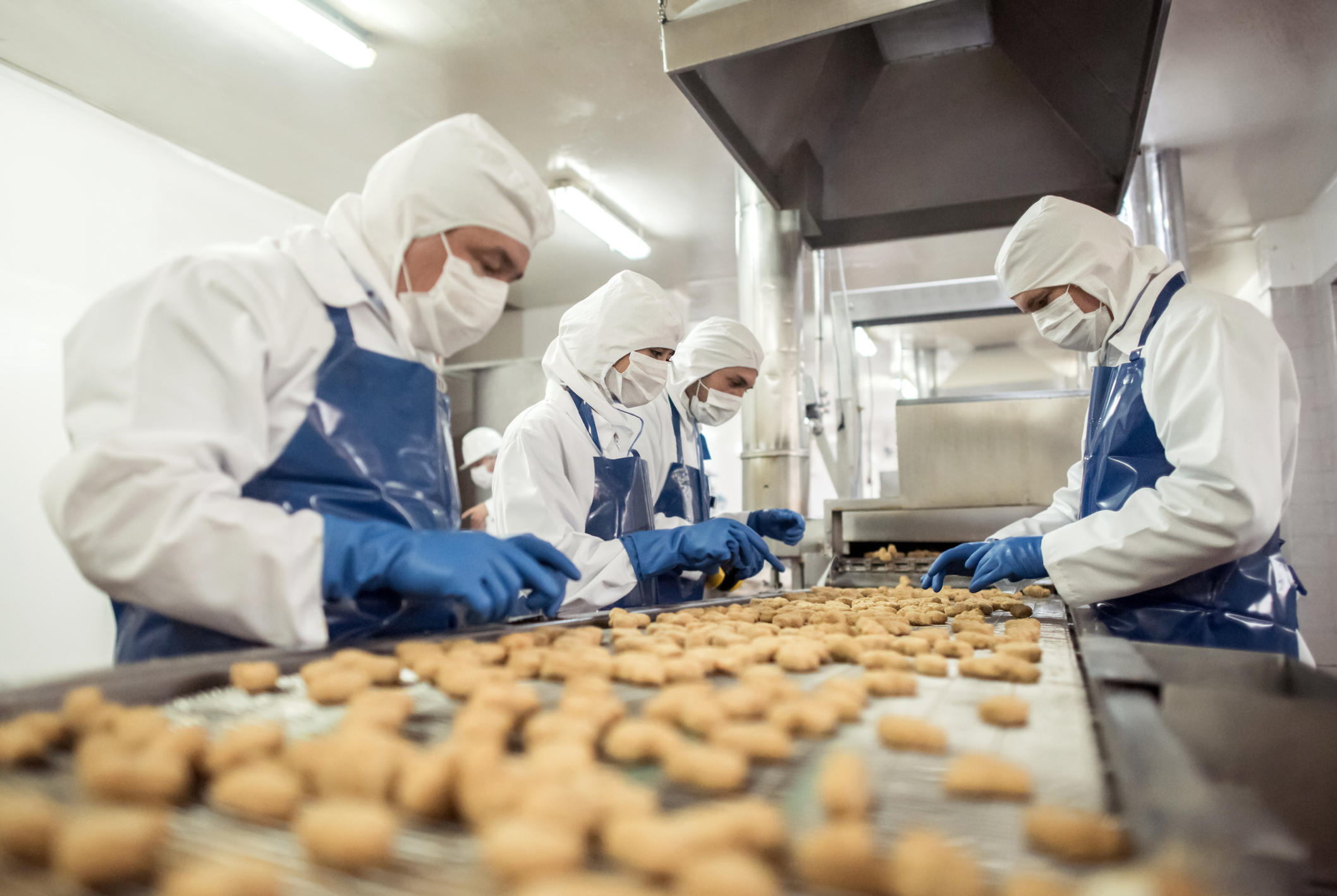
With experienced operators difficult to recruit, automation handles routine, repetitive, or physically demanding tasks. This allows workers to focus on supervisory, quality assurance, and problem-solving roles, transforming jobs into higher-skilled positions.

Automation Across the Food Production Process

Raw material handling and storage

Automated storage and retrieval systems manage ingredient inventories efficiently. Robotic systems handle bag opening, dispensing, and batching. Precise weighing ensures recipe consistency, critical for quality and compliance.


Processing and cooking


Automated systems control cooking temperatures, mixing times, and critical parameters with precision. This ensures quality whilst reducing energy consumption. In complex production processes, automation ensures perfect synchronisation.


Packaging operations


High-speed packaging systems fill containers, apply labels, seal packages, and perform quality checks at thousands of units per hour. Modern lines allow quick changeovers between formats, supporting product variety.


Quality inspection


Automated inspection systems examine products for defects, verify weights, check seal integrity, and detect contaminants. X-ray and metal detection identify foreign objects, whilst vision systems assess colour, shape, and surface defects continuously without fatigue.


Palletising and distribution


Robotic palletisers stack products efficiently. Automated guided vehicles (AGVs) move products through facilities without manual handling. Automated storage optimises warehouse space and facilitates FIFO inventory management.


Smart food factories and Industry 4.0


The smart food factory represents the convergence of automation in food processing with digital technologies, transforming traditional facilities into connected, intelligent ecosystems.


Connected production systems


Machines, sensors, and systems communicate seamlessly. Production data flows in real-time to cloud-based platforms where analytics identify optimisation opportunities. Operators access dashboards showing key performance indicators. This connectivity extends to suppliers and customers, creating integrated supply chains.


Artificial intelligence and machine learning


AI algorithms analyse production data to optimise processes automatically. Machine learning systems predict quality issues, adjust parameters to compensate for ingredient variations, and schedule maintenance optimally. These systems continuously improve, learning from each production run.


Digital Twins and simulation


Digital twins create virtual replicas of production lines for testing process changes, new products, and equipment configurations without disrupting production. This reduces innovation risk and cost whilst accelerating time-to-market.


Real-time monitoring and control


Smart food production systems provide unprecedented visibility. Managers monitor production from anywhere, receiving alerts when parameters deviate. This enables proactive management and faster problem resolution.


Enhanced traceability and transparency


Industry 4.0 technologies create comprehensive traceability from ingredient sourcing to final delivery. Blockchain integration provides immutable records that build consumer trust and facilitate rapid, precise recalls.


The future of automated food production

Food manufacturing automation continues to evolve rapidly. Key trends include:

Advanced Collaborative Robotics – Next-generation robots will work more intuitively alongside humans with enhanced sensing and AI-driven adaptability.

Hyper-Personalisation – Automation will enable economical production of customised products in small batches. Mass customisation will become standard.

Sustainable Automation – Environmental concerns drive automation focused on minimising energy, reducing water usage, and eliminating waste whilst maintaining productivity.

Autonomous Operations – AI-driven systems will operate autonomously, making real-time adjustments. Operators will supervise autonomous systems and handle exceptions.

Enhanced Human-Machine Collaboration – Future automation will augment human capabilities. Augmented reality will guide operators, whilst AI assistants provide decision support.

As consumer expectations rise, regulations tighten, and challenges intensify, automation transitions from competitive advantage to operational necessity. The question is no longer whether to automate, but how quickly manufacturers can implement solutions for long-term success.

FAQ Section

What is food manufacturing automation?

Food manufacturing automation is the use of advanced technology, robotics, and intelligent systems to perform production tasks with minimal human intervention. It encompasses everything from ingredient handling and processing to packaging, quality control, and logistics, creating more efficient, consistent, and safe food production environments.

How much does food factory automation cost?

Costs vary significantly based on scope and complexity. Simple applications like automated packaging might start from £50,000, whilst comprehensive line automation can exceed £1 million. However, phased implementation allows spreading costs over time, and ROI typically materialises within 2-4 years through labour savings, reduced waste, and increased productivity.

What are the main benefits of automation in food processing?

Key benefits include enhanced food safety through reduced contamination risks, improved product consistency and quality, increased productivity and efficiency, reduced waste, better regulatory compliance, comprehensive traceability, and the ability to operate with fewer skilled workers whilst maintaining or improving output.

Can small food manufacturers afford automation?

Yes. Automation is increasingly accessible to smaller operations through modular systems, collaborative robots, and flexible financing options. Starting with targeted applications addressing specific bottlenecks delivers quick wins that fund subsequent expansion. Many suppliers offer scalable solutions designed specifically for small to medium manufacturers.

How does automation improve food safety?

Automation enhances food safety by minimising human contact with products, maintaining consistent process parameters that prevent contamination, providing comprehensive data logging for traceability, enabling more thorough and consistent cleaning, and facilitating rapid identification and isolation of quality issues before products reach consumers.

What is Industry 4.0 in the food industry?

Industry 4.0 in food manufacturing refers to the integration of digital technologies, data analytics, IoT sensors, and intelligent automation to create smart, connected production environments. These systems collect and analyse data in real-time, enabling predictive maintenance, process optimisation, and adaptive production that responds automatically to changing conditions.

How long does it take to implement food production automation?

Implementation timelines range from a few weeks for simple robotic cells to 12-18 months for complete line automation. Factors affecting duration include system complexity, integration requirements, facility modifications needed, and the extent of customisation. Phased approaches allow quicker initial deployment with ongoing expansion.

Will automation replace workers in food manufacturing?

Automation transforms rather than eliminates jobs. Whilst it handles repetitive, physically demanding tasks, it creates demand for skilled technicians, system operators, and maintenance personnel. Most manufacturers redeploy workers to higher-value roles focused on quality assurance, process optimisation, and supervisory functions, often with improved working conditions and higher wages.


Podobné články


Témata

Food & Beverage / CPG